
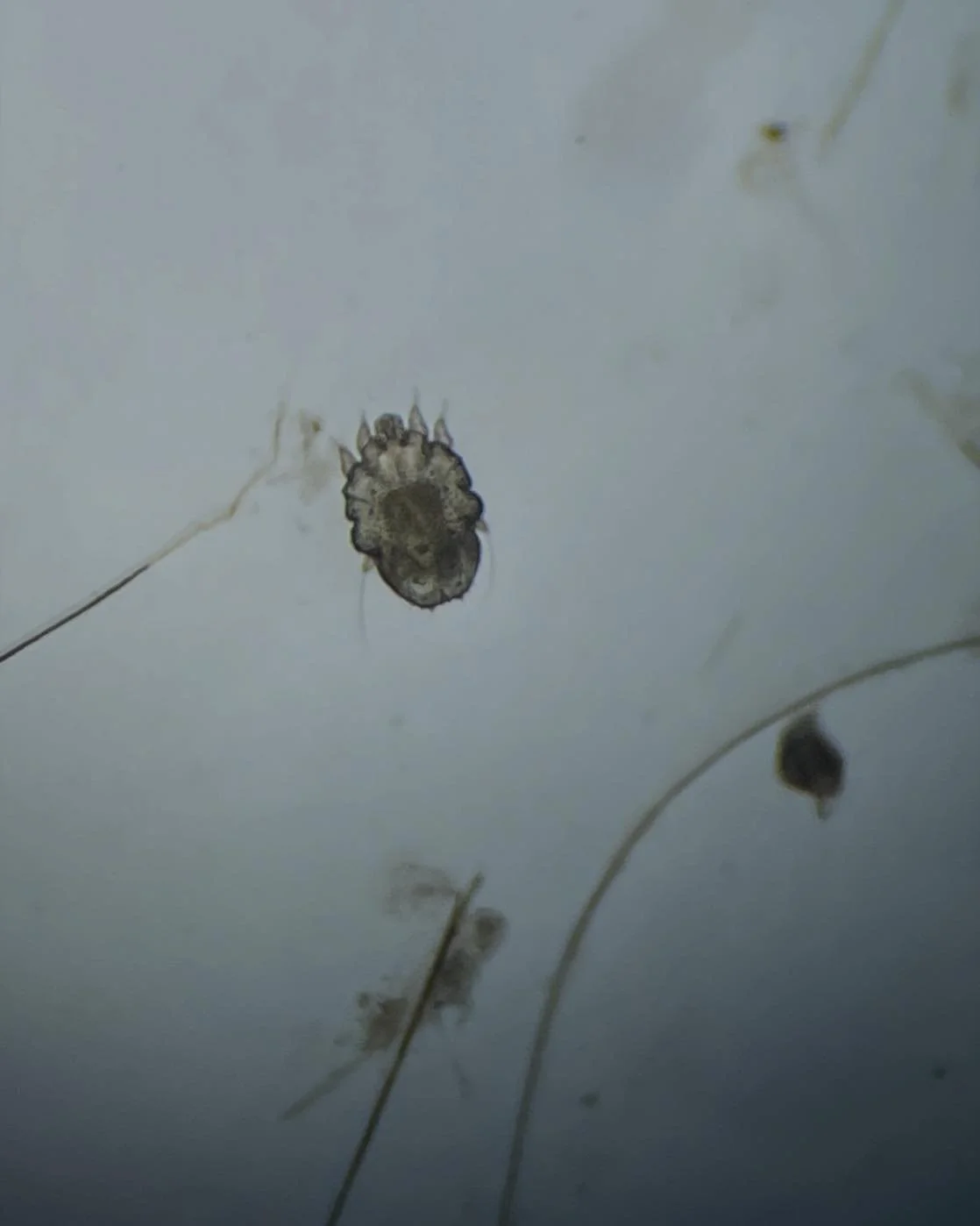
Mange
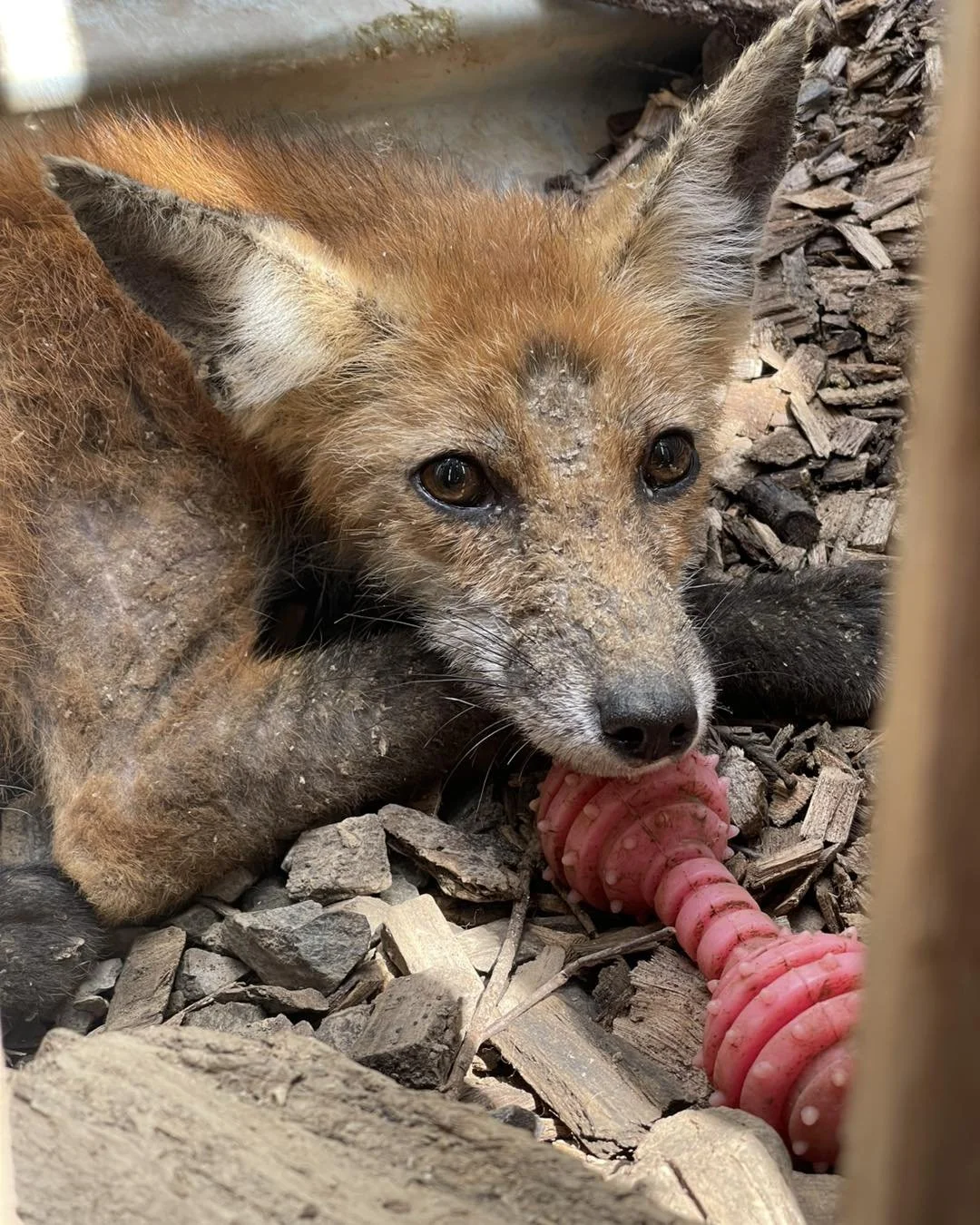
Mange is, unfortunately, a common condition affecting wild mammals in Pennsylvania. It is caused by several parasitic mites, including Sarcoptes scabiei, Notoedres centrifera, and species in the genus Demodex. These mites burrow into the skin of their host to feed and reproduce, leading to intense itching, hair loss, and thickened, crusted skin.
While most mammals can be affected by some form of mange, the species most frequently admitted to rehabilitation centers in our area are canids (such as foxes and coyotes), raccoons, and gray squirrels. Mange is also a significant concern for Pennsylvania’s black bear population and has been described as epidemic in parts of the state.
Mange mites are highly contagious and, depending on the species, can spread to domestic animals and even humans through direct or indirect contact with an infected animal. Although there is a human-specific strain of Sarcoptes scabiei that causes scabies, infestations from animal-specific mites typically resolve on their own, as the mites cannot complete their life cycle on a human host.
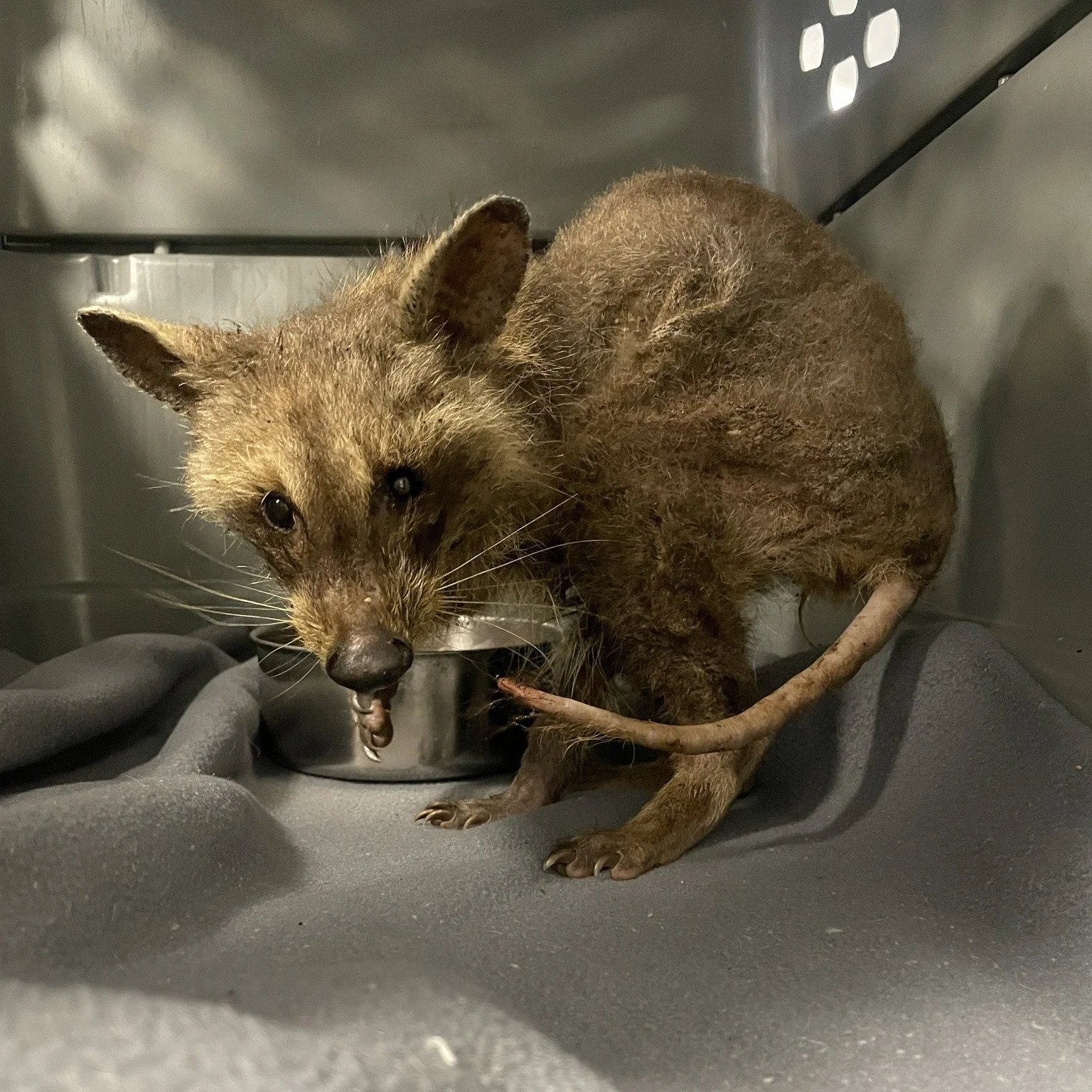
When people encounter an animal with mange, one of the most common questions is how they can treat it themselves. While the intention is good, this is not something that can be safely or effectively handled at home. In the past, some have suggested leaving medications like ivermectin in food in hopes that the affected animal will consume it. However, there is no way to ensure the correct animal receives the medication… or that multiple people aren’t unknowingly dosing the same animal.
Medications like ivermectin require precise dosing, and even small errors can be dangerous. We have seen animals admitted with mange that did not survive due to well-meaning but improper at-home treatment attempts that resulted in overdose. There is also the risk of non-target animals consuming the medication. Certain domestic dog breeds, in particular, can have severe or even fatal reactions to ivermectin, meaning a misplaced dose could unintentionally harm a pet.
Additionally, the overuse and misuse of ivermectin has contributed to growing resistance in mite populations, reducing its effectiveness as a treatment while still posing risks to wildlife and other animals.
Lastly, while mange is often viewed as a serious condition on its own, it is frequently a secondary symptom of another underlying health issue. The mites that cause mange are naturally present on many wild mammals, and a healthy immune system typically keeps their populations in check. When an animal becomes immunocompromised, however, those mite populations can grow rapidly and lead to the visible symptoms associated with mange.
Emerging research has begun to identify connections between mange and other conditions, such as rodenticide poisoning and Lyme disease. These underlying issues are not always apparent based on appearance alone, meaning an animal may be dealing with multiple serious health challenges at once. If only the mange is treated, without addressing the root cause, the condition is likely to return.
For these reasons, it is always recommended that animals with mange be safely captured and transported to a licensed wildlife rehabilitation center, where they can receive comprehensive care rather than being treated in the field.
Additional Material: