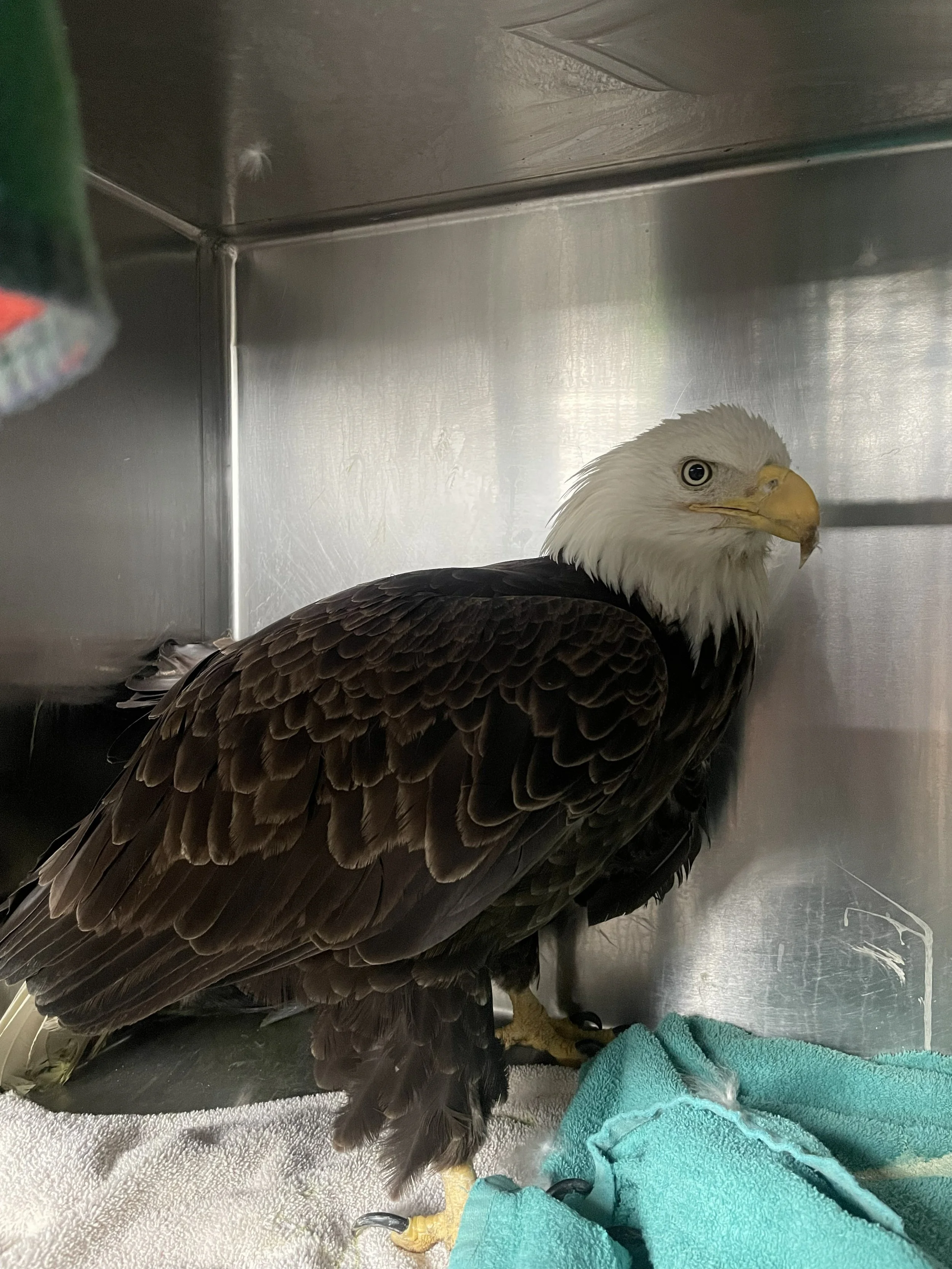
Grounded: An Eagle’s Unexpected Detour
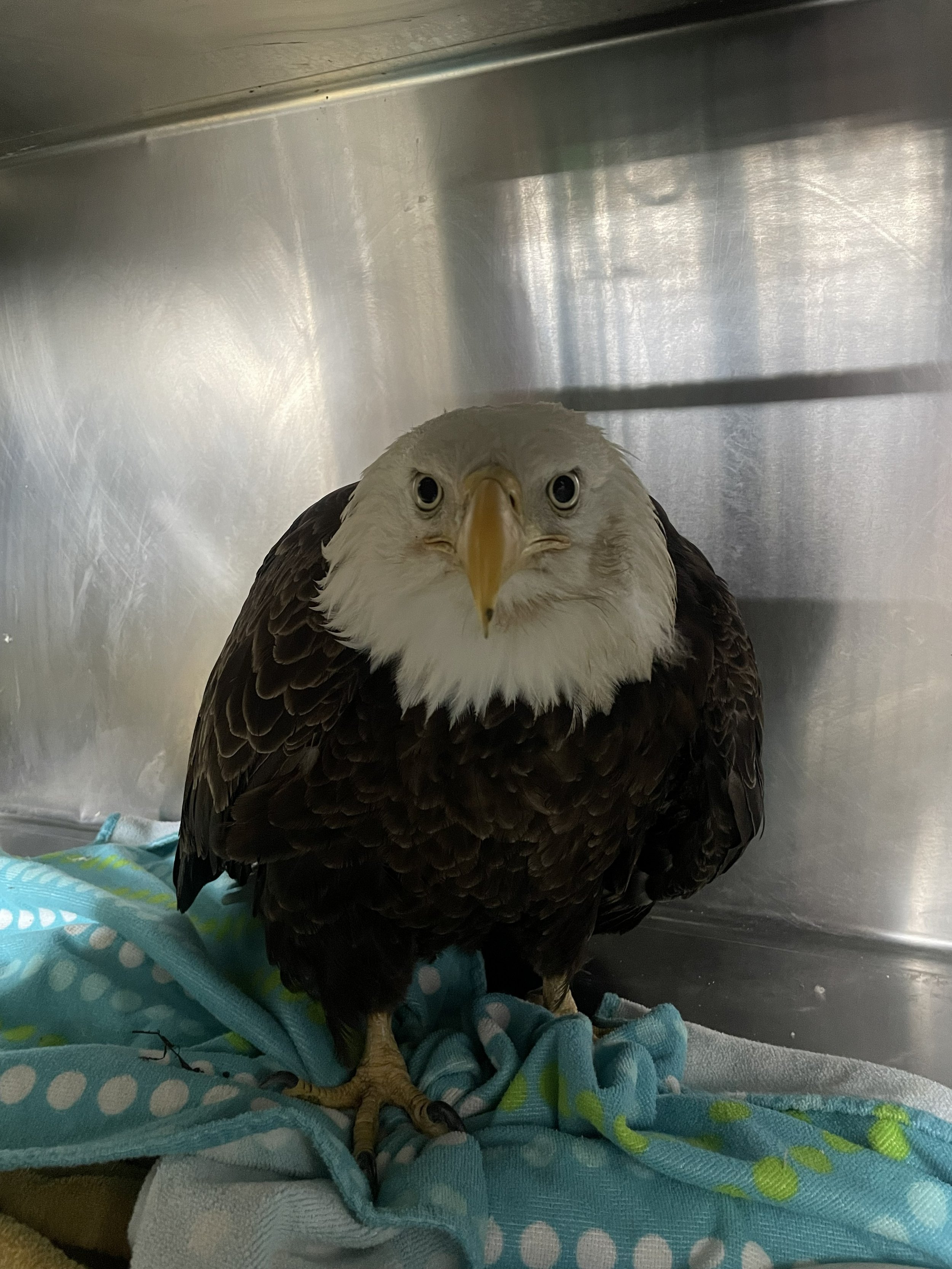
The Pennsylvania Game Commission spotted this adult male eagle floating in the middle of a lake in Lower Bucks. Wading in to retrieve it, they saw that it had a wing injury and was so water logged that it couldn’t take off into flight. They brought him right to Aark!
When the eagle was admitted, our clinic team performed a lead test which showed high levels of lead in his bloodstream: 24.5 ug/dl. Lead tests test the blood for traces of lead, however, in lead poisoning cases, an animal’s bones can store high amounts of lead as well.
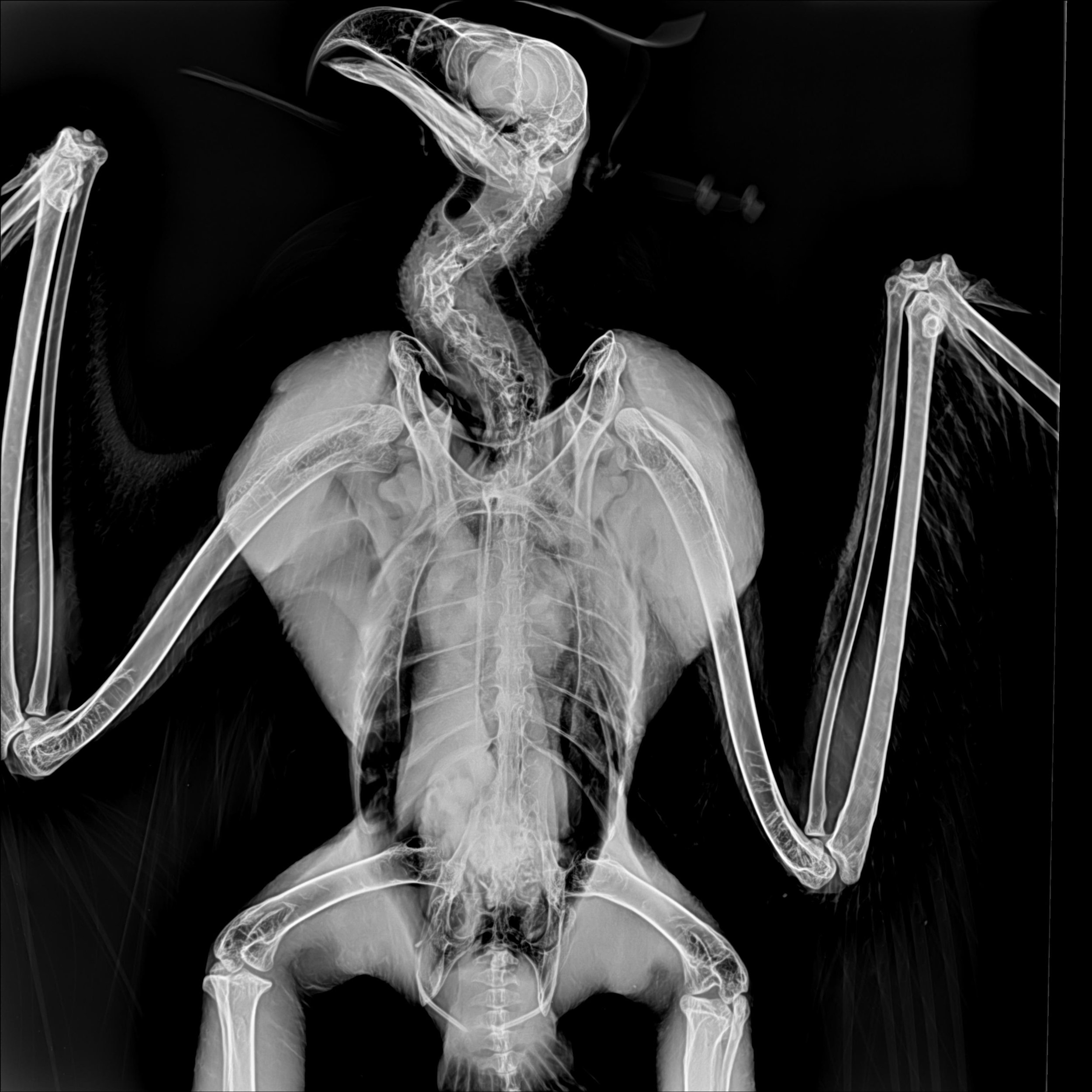
Why was this eagle poisoned? In his X-ray, there were no physical heavy metals noticeable, such as bullet fragments, so we’re not sure how he ended up with lead poisoning. The most common causes are being shot with lead ammunition or consuming lead fishing gear or fish that consumed lead fishing gear.
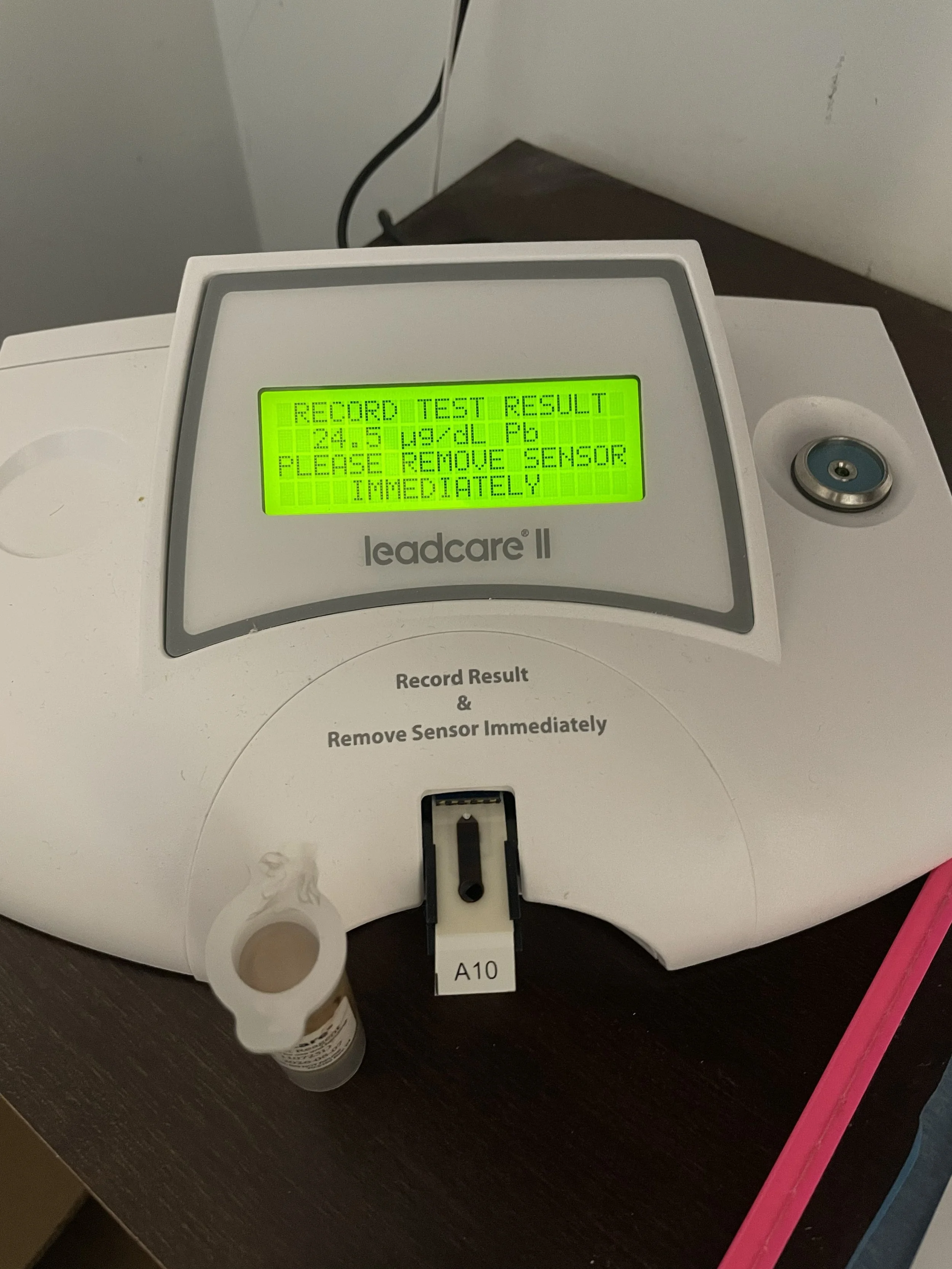
His treatment included Chelation therapy for the lead poisoning as well as fluids, vitamin supplements, and pain management and antibiotics for his wing injury. After about a week of lead tests, his levels had already lowered which is a great sign. He was moved to an outdoor enclosure shortly after where he can rebuild flight muscle and continue the healing of his wing.
Eagles are one of the most expensive animals we receive. Firstly, they have huge appetites! And secondly, they often need to be treated for lead. Even though we have an in-house lead testing kit, it is still expensive to treat lead poisoning. Each test requires a cartridge, a pack of which can be upwards of $700. A poisoned patient needs to be tested every week until the lead has left the blood, bones, and body.
We’re looking forward to his return to the wild!